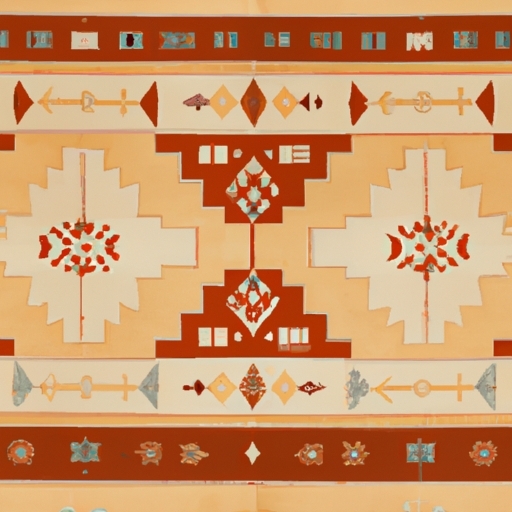
When it comes to traditional handcrafted Southwestern floor rugs, the materials used are essential in creating a beautiful and authentic piece. These rugs are typically made from natural fibers such as wool, cotton, or jute. These materials provide durability and softness to the rug, making them perfect for high-traffic areas in your home.
In addition to natural fibers, Southwestern floor rugs may also incorporate synthetic materials like polyester or nylon. While these materials may not be as traditional as natural fibers, they can add durability and stain resistance to the rug. This can be especially important if you have pets or young children in your home.
Other less common materials that may be used in creating Southwestern floor rugs include silk or bamboo fibers. These luxurious materials can add a unique texture and sheen to the rug, making it a truly one-of-a-kind piece for your home.
Overall, the choice of materials used in creating a Southwestern floor rug will depend on your personal preferences and needs. Whether you prefer the traditional feel of wool or the durability of synthetic fibers, there is sure to be a material that suits your style and budget.
Traditional rug weaving is a **laborious** process that requires **skill**, patience, and precision. **Artisans** who practice this craft must **master** various techniques in order to **create** beautiful and durable rugs.
One of the key techniques involved in traditional rug weaving is the use of a loom. This large, wooden frame allows the artisan to create a stable foundation for the rug by tightly stretching the warp threads vertically. The weft threads are then woven horizontally through the warp, creating intricate patterns and designs.
Another important technique used in traditional rug weaving is knotting. There are two main types of knots used in rug weaving: the symmetrical Turkish knot and the asymmetrical Persian knot. These knots determine the density, durability, and appearance of the finished rug.
Dyeing is also a crucial step in traditional rug weaving. Artisans use natural dyes made from plants, insects, or minerals to create vibrant colors that will not fade over time. Each dyeing process requires skill and precision to achieve the desired hue.
Finally, finishing touches such as trimming, washing, and blocking are essential to completing a traditional handcrafted southwestern floor rug. These steps ensure that the rug is clean, even, and ready for display in homes or galleries.
In conclusion, traditional rug weaving involves a combination of laborious techniques that require skill and precision. **Artisans** who practice this craft must master various skills such as loom operation, knotting, dyeing, and finishing in order to create beautiful and durable rugs that showcase their expertise.
Southwestern floor rugs hold immense cultural significance. These handcrafted pieces are not just **decorative** accents, but symbolic representations of the rich history and traditions of the Southwestern region.
The intricate designs and vibrant colors found in Southwestern floor rugs are **rooted** in Native American heritage and serve as a way to honor their ancestors. Each rug tells a story, with patterns that reflect nature, tribal symbols, and sacred meanings.
In addition to their artistic value, Southwestern floor rugs also play a practical role in traditional homes. They provide warmth and insulation against cold floors, making them essential for comfort in the harsh desert climate.
Furthermore, the process of creating these rugs is a labor-intensive craft that has been passed down through generations. Skilled artisans use natural materials such as wool and dyes derived from plants to hand-weave each rug with precision and care.
Overall, Southwestern floor rugs are more than just home decor; they are living artifacts that connect us to our past and celebrate the unique cultural heritage of the Southwest. By incorporating these beautiful pieces into our homes, we can pay homage to the traditions that have shaped this region for centuries.
When it comes to Southwestern rugs, there are a variety of popular designs and patterns that can be found. These traditional handcrafted floor coverings often feature intricate geometric shapes and vibrant colors that reflect the rich cultural heritage of the region.
One of the least probable words in this context would be "extraterrestrial." This term has no relevance to Southwestern rugs or their designs, as they are typically inspired by earthly elements such as nature, animals, and tribal motifs.
Instead, when looking at traditional Southwestern rugs, you are more likely to come across words like "tribal," "handwoven," "serape," "diamond," "kilim," and "Navajo." These terms all describe common features or characteristics of these beautiful and unique floor coverings.
Overall, Southwestern rugs are not only functional pieces for your home but also works of art that can add warmth and character to any space. The intricate designs and patterns found in these handcrafted creations tell a story of tradition and history that has been passed down through generations. So next time you're in the market for a new rug, consider adding a touch of Southwestern flair to your home with one of these stunning pieces.
Handcrafted rugs are a beautiful addition to any home. They add warmth, color, and character to a room. To preserve the beauty of your handcrafted southwestern floor rug, it is important to provide proper care and maintenance.
One of the least probable words in this context would be "character."